






Promoted to Leader at age 25. A global job where a young woman can succeed.
Profile of Iona Yoshioka, Leader at the the Kawasaki Operations Department
Graduated from Aso Foreign Language Tourism and Patissier College, Department of Overseas Business Trade. After receiving a job offer from Sync Logistics in September 2015, she worked as an intern for six months before joining the company as a new grad employee in April 2016. She was assigned to the Fukuoka office where she was put in charge of intermodal transport services for Mongolia. She was transferred to the Kawasaki office and was sent on a business trip to Mongolia. She then joined the Kawasaki operations team in December 2018, and became its leader in October 2020.
Joined Sync Logistics After Being Drawn to the Work with English Immersion
Having studied overseas business at a vocational school, I wanted a job where I would be immersed in English all day long. When I was searching for a company where I could communicate with people abroad in English, I learned about Sync Logistics at a job fair at school, so I interviewed with them.
The company was in its third year, and they were taking all the help they could get. In the middle of the interview we switched to English, and as soon as it ended, they offered me a job. I was surprised at the speed of it all, but because they said the job involved communicating with overseas agencies in English, I accepted the offer. In the following month, I started working as a paid intern.
The internship lasted for about six months. For the first two weeks, I received training in the basics of trade. After that, I mainly supported my boss by assisting in document creation and checking while learning the basics of my actual work. Actually, before they offered me a job, I was already set on going to the Philippines for language study, so they graciously let me take time off of my internship to join a two-week program at a university there.
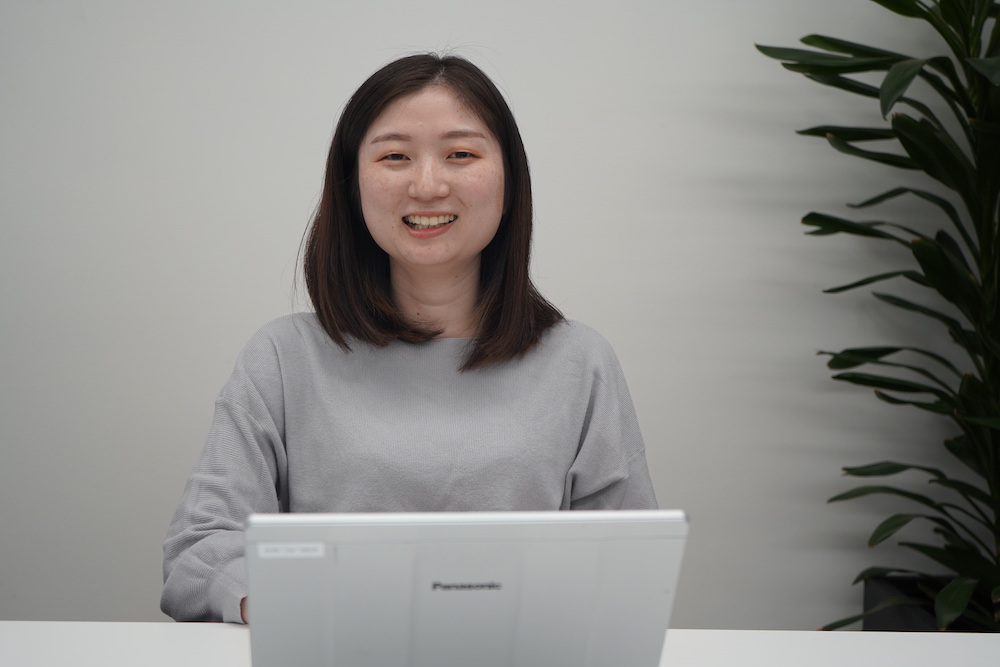
Single-handedly Coordinating with Agencies in Mongolia Right After Joining the Company
After joining the company, I was assigned to the Overseas Business Department at the Fukuoka Office. I was put in charge of used car transport operations for Mongolia, and I was responsible for arranging ships for transporting used cars and coordinating with agencies there. At the time, there was only one other person in the department, and that person was in charge of another country so I handled transport to Mongolia. Compared to my internship, the scope of my duties and responsibilities expanded instantly.
Our job was to smoothly transport the vehicles of our customers (exporters of used cars from Japan) to the local consignee (importer). This meant researching and arranging ships with optimized schedules and freight rates, and successfully handing over work to the local agency. All communications with the agency were conducted in English.
After being transferred to the Kawasaki office in my second year with the company, I continued to work on Mongolia-related transport operations, and I also had a one-week business trip there. The best part of that trip was seeing with my own eyes how the vehicles we sent were being stored and sold. After returning to Japan, the experience made it easier for me to explain things to customers and new employees. Also, speaking directly with the local agency and the railroad company involved in transport deepened my understanding of the differences in values and approaches of Mongolians and Japanese, which made it easier for me to do my job.
By working in our Mongolia-related operations for two and a half years, I acquired practical business English and scheduling abilities which I still use in my current work.

Seeing the Results of Hard Work in Numbers is Enjoyable
I am currently a Leader at the Kawasaki Operations Department. The main duties of the department are advance coordination of the efficient loading and transport of customers’ vehicles into containers, and preparing customs declaration documents given to customs brokers. Unlike the Mongolia team which communicates often with the local agency in Mongolia, my main job is coordination in Japan before vehicles are transported. At any given time, our department is in charge of 30 to 40 companies including small to medium-sized exporters. Many of our tasks involve communicating in English with foreign customers, including those in Mongolia and Russia.
Each person in our department handles about 800 vehicles per month, or about 2400 vehicles for the whole department. If we efficiently handle customers’ requests, we can transport in the shortest time possible, allowing us to handle even more vehicles. The results of our hard work are reflected in our numbers, which I feel makes my work worthwhile.
However, because we provide full, tailor-made services based on our customers’ needs, there are times when we cannot move as fast as we’d like. Particularly, because we have to meticulously communicate when adjusting container plans, if a customer has many vehicles to transport, we need to handle dozens of emails every day. It’s difficult for both parties, and there’s a risk of missing emails so we switched to a centralized management system that I proposed using Google Sheets.
As a result, complex coordination and adjustments were eliminated, and we were able to ship in the shortest time possible. I was very happy that what I proposed started working in a practical way.

Sharing Knowledge and Experiences with Subordinates and Growing the Team
My experience working with the Mongolia team and in the Operations Department taught me all aspects of trade-related operations for transporting used cars overseas. I think that experience was why I was promoted to Leader, but I’m still not used to my current position.
As a Leader, I think that what’s expected of me is to train my subordinates and to pass on the knowledge and know-how I have cultivated through the years. This includes how to troubleshoot case-by-case problems, and give advice on their proposals to customers. Having said that, I still feel I cannot clearly verbalize what I know. When I communicate through nuance, my subordinates receive incomplete information, so I would like to communicate in a more understandable way.
Our company has a policy of more than doubling the number of export vehicles we handle within three years. I look forward to further growth as individuals and as a team, and I want to promote operational efficiency even further.
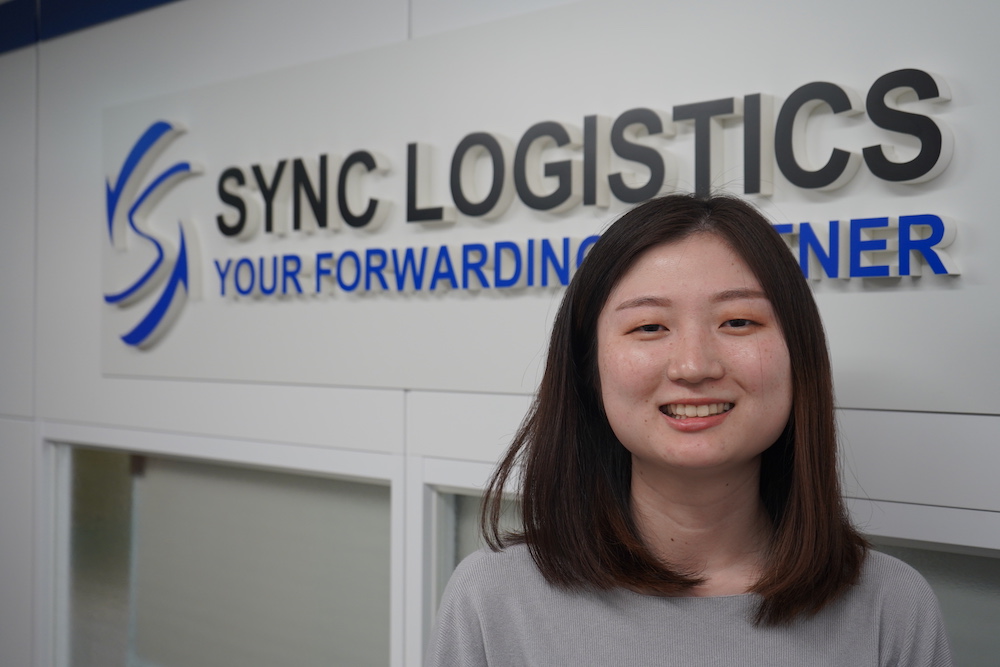
A Flat Corporate Culture with Vigorous Exchange of Opinions
People in the Kawasaki office have an average age of late 20s to early 30s, and the vibe is bright and friendly. The ratio of men to women is about 1:1, and there are many women who have children or who continue to work from home after they move far away because of their husbands’ job transfers. Our company promotes working from home, so it’s easy to work even after marriage or having children.
Because operations work involves various people in and out of the company such as customers, customs brokers, sales people, and yard workers, I think this job is suited for people good at communicating, and people who are good at properly conveying what they think to the other party. Our company is made up of various personalities who exchange opinions vigorously, so I think it’s important to proactively speak up.
If there is one thing I could advise job seekers, it would be “you won’t know until you try.” You really won’t know if you are suited for a job until you join the company. I had my worries before I joined this company, but now I’m happy I got a job in the trading industry.